What Is Zinc Oxide?
Zinc oxide is a white, odorless compound made from zinc and oxygen. Although it does not dissolve easily in water, it is widely valued in skincare, sunscreens, cosmetics, and industrial products for its ability to protect against UV rays, fight bacteria, and help reduce skin irritation.
Zinc Oxide Quick Facts
Property | Value |
IUPAC Name | Zinc oxide |
Chemical Formula | ZnO |
Molar Mass | 81.38 g/mol |
CAS Number | 1314-13-2 |
Appearance | White powder |
Odor | Odorless |
Density | 5.61 g/cm³ |
Melting Point | 1,975°C |
Solubility in Water | Practically insoluble |
Crystal Structure | Hexagonal (Wurtzite) |
Classification | Inorganic compound / Metal oxide |
What Is Zinc Oxide Used For?
Zinc oxide is a versatile inorganic compound widely used in skincare, medicine, cosmetics, and various industrial applications. Known for its protective, soothing, and antimicrobial properties, it plays an important role in products ranging from sunscreens to pharmaceutical creams and manufacturing materials.
Skincare and Cosmetics
Sunscreens:
Zinc oxide cream is a mineral UV filter that provides broad-spectrum protection against both UVA and UVB radiation. Unlike chemical sunscreen ingredients that absorb UV rays, zinc oxide forms a protective layer on the skin that reflects and scatters harmful sunlight.
Acne and Oil Control:
Due to its anti-inflammatory and astringent properties, zinc oxide can help absorb excess oil, reduce skin redness, and support the management of acne-prone skin.
How It Works on Skin?
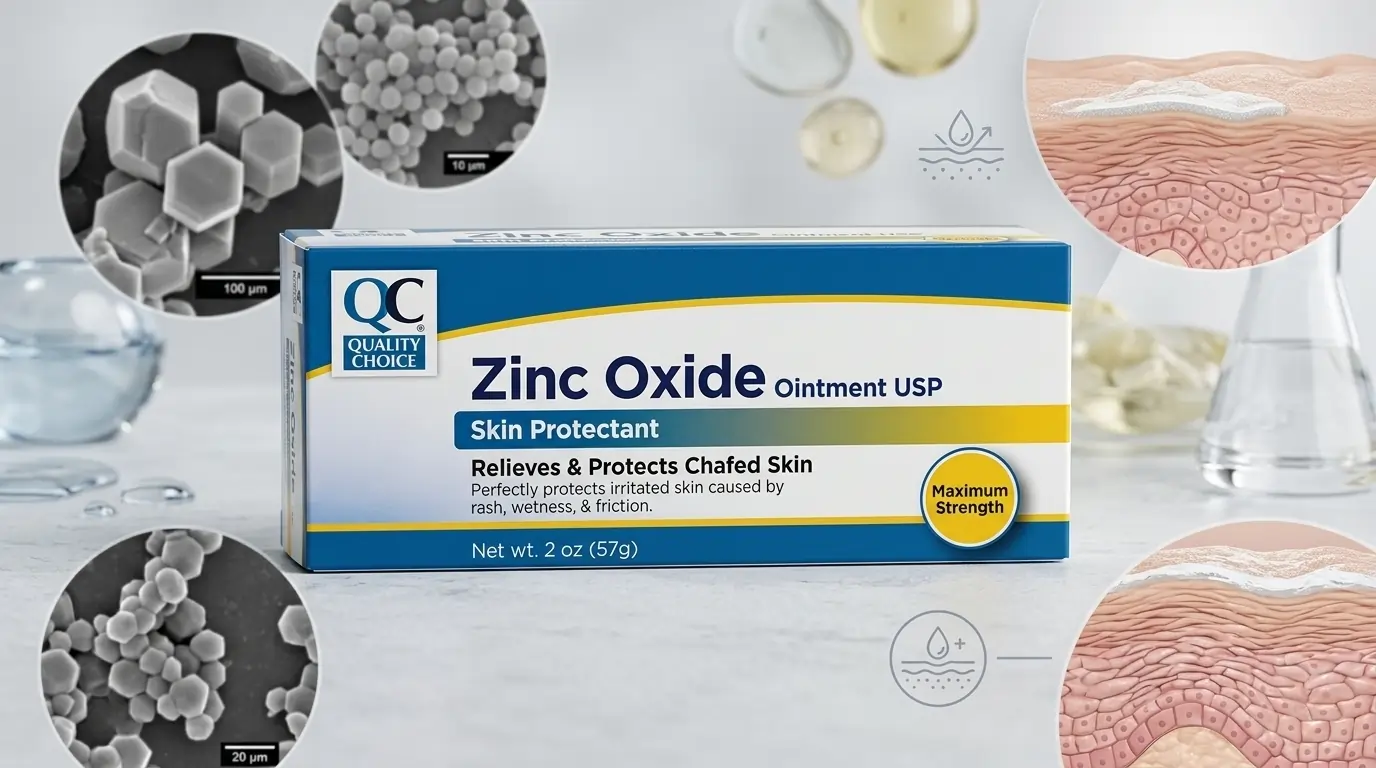
Zinc oxide cream sits on top of the skin, not absorbing in. When you apply it, it creates a thin protective shield. This shield works in different ways to protect, soothe, and heal your skin.
It Blocks UV Radiation:
Zinc oxide cream works differently from chemical sunscreens. Instead of absorbing UV rays and turning them into heat, it acts as a physical shield. It bounces both UVA and UVB rays off your skin to keep it safe. That’s why it’s seen as one of the best, broad-spectrum protectors out there today.
It Creates a Protective Skin Barrier:
Zinc oxide creates a protective, breathable layer on sore or injured skin. It shields against moisture, bacteria, friction, and other irritants. This lets the skin underneath start healing. It works great for diaper rash, wounds, and areas that chafe easily, really anywhere extra protection is needed.
It Reduces Inflammation:
Zinc oxide cream has awesome anti-inflammatory properties that calm redness and swelling. It quiets down your skin’s reaction, helping with eczema, dermatitis, sunburn, and acne, so it’s really useful for those issues.
It Fights Bacteria and Fungi:
Zinc oxide gives off zinc ions upon touching your skin. These ions fight off bacteria and fungi, which helps stop infections from small cuts, burns, and rashes. Also, it treats acne by decreasing the bacteria that causes those pesky zits.
It Supports Skin Healing:
Zinc is super important for healing wounds. Zinc oxide, when put on skin, boosts cell growth, makes more collagen, and fixes tissue too. This helps damaged skin get better quickly and cuts down risks of scars or infections.
It Regulates Moisture:
Zinc oxide cream helps keep the skin balanced by soaking up excess oil and moisture. This can be helpful for people with oily or acne-prone skin, while also protecting areas where sweat and moisture can cause redness, irritation, or discomfort.
Key Medical Applications
Diaper Rash Relief:
Zinc oxide cream is commonly used to prevent and manage diaper rash by forming a protective barrier that shields an infant’s sensitive skin from excess moisture and irritation caused by wet or dirty diapers.
Support for Wound Healing:
It aids in the recovery of minor skin injuries, such as small cuts, abrasions, and burns, by creating a protective layer that promotes skin repair.
Eczema and Skin Irritation Management:
Owing to its calming properties as an anti-inflammatory agent as well as a mild astringent, zinc oxide can be employed to ease symptoms of eczema, poison ivy, insect bites, and other skin irritations.
Protection Against Sun Damage:
Zinc oxide cream is an important element in mineral sunscreens because of its role in protecting the skin from ultraviolet radiation, which causes burns.
Treatment of Chafing and Dry Skin:
This will help ease and prevent irritation from friction of skin against skin or clothes and aid in the natural healing of the skin.
Who Should Use Zinc Oxide Cream?
It can be applied by individuals of any age, and it is often employed to protect the skin against sunburn, reduce irritation, and offer protection from UV rays. It is very gentle, making it a preferred ingredient in creams for use on sensitive skin, particularly infant skin and that of expectant mothers.
Zinc Oxide Cream For Adults:
There are different ways that adults can utilize zinc oxide depending on their needs, such as sunscreen, acne treatment, wound treatment, and irritation treatment. Zinc oxide works best for those with sensitive skin as it acts upon the skin without being absorbed by the body.
Babies and Children:
Zinc oxide cream is commonly found in diaper rash cream and baby-safe sunscreen because of its moisturizing and protective nature. Zinc oxide forms a protective layer on the skin by guarding it against moisture and friction. When applied in accordance with usage directions, zinc oxide is safe for babies and children.
Pregnant and Breastfeeding Women:
In fact, zinc oxide is widely recommended during pregnancy and lactation period because it is very minimally absorbed when applied to the skin. It can be included in mineral sun blocks and protective creams which offer high efficiency while not introducing large amounts of active ingredients into the body. Nevertheless, it is necessary for any pregnant or nursing woman to carefully follow recommendations provided by manufacturers of any cosmetics or medications.
Safety and Precautions of Zinc Oxide Cream
External use | Apply zinc oxide products only as directed on the skin. |
|---|---|
Eye Contact | Avoid contact with the eyes; rinse thoroughly with water if accidental exposure occurs. |
Broken Skin | Do not apply to deep wounds or severely damaged skin unless advised by a healthcare professional. |
Storage | Store in a cool, dry place away from heat and direct sunlight. |
Expired Products | Do not use zinc oxide products after the expiration date. |
Persistent Symptoms | Consult a healthcare provider if symptoms worsen or do not improve within 7 days. |
Children | Keep zinc oxide products out of the reach of children and use under adult supervision when appropriate. |
Who Should Avoid Zinc Oxide Cream?
Most people can use zinc oxide without issues, but it may not be suitable for everyone.
Allergies and Sensitivities:
Although allergic reactions to zinc oxide are uncommon, they can occur in some individuals.
- Skin redness
- Itching or burning
- Rash or hives
- Swelling of the treated area
If you experience any of the following after use, stop using zinc oxide immediately and consult your doctor if symptoms persist or get worse.
Important Precautions:
To use zinc oxide safely and effectively, keep the following precautions in mind:
Following these precautions can help ensure that zinc oxide remains a safe and effective option for protecting and soothing the skin.
Side Effects of Zinc Oxide Cream
Zinc oxide is regarded as safe for use as directed, and most of its side effects are relatively mild.
Topical Use (Creams, Ointments, and Sunscreens):
Side effects are rare but may include:
In rare cases, allergic reactions such as swelling, severe rash, or difficulty breathing may occur.
Inhalation Exposure:
Breathing in zinc oxide dust or fumes in industrial settings may cause:
- Coughing or throat irritation
- Fever and chills
- Chest discomfort
- Shortness of breath
High exposure can lead to metal fume fever, a temporary flu-like illness.
Ingestion:
Swallowing large amounts of zinc oxide may cause:
- Nausea and vomiting
- Stomach cramps
- Diarrhea
Long-term excessive intake may interfere with copper absorption.
When to Seek Medical Advice:
Discontinue use of zinc oxide and seek immediate medical attention if you develop irritation or allergic reactions.
Storage and Disposal
Proper storing and disposing of zinc oxide ensure the product works well and minimizes any risks of accidental contact with the product.
How to Store Zinc Oxide Products:
Safe Disposal Guidelines: